

Beyond the Showroom: Smarter Ways to Find New Cars for Sale in the USA

Buying a new car is an exciting milestone, but finding the right vehicle requires more than visiting a dealership and choosing a model. Today’s car buyers have access to online research, vehicle comparisons, pricing information, and digital shopping tools that make the entire process more convenient. Whether you are looking for a fuel-efficient sedan, a family-friendly SUV, or a powerful pickup truck, exploring new cars for sale USA can help you make a confident and informed decision.

With resources available through AutoDepot, buyers can explore their options, understand vehicle features, and discover smarter ways to approach their next car purchase.

Start Your Car Search Online

The traditional car-buying process often involved visiting multiple showrooms to compare models, features, and prices. Today, much of that research can happen before you leave home. Online vehicle searches allow buyers to explore different makes and models, review specifications, and narrow down their preferences based on budget and lifestyle.

When searching for new cars for sale USA, begin by identifying the type of vehicle that suits your everyday needs. Consider your daily commute, passenger requirements, cargo space, fuel efficiency, and preferred driving experience. Creating a shortlist of suitable vehicles makes it easier to focus on options that offer genuine value.

AutoDepot provides an online starting point for researching vehicles and exploring available car-buying resources. Using digital research alongside dealership visits can save time and help you arrive prepared with the right questions.

Set a Realistic Budget Before You Buy

One of the most important steps in buying a new car is establishing a realistic budget. The purchase price is only one part of the total cost of ownership. Buyers should also consider insurance premiums, fuel or charging costs, registration fees, maintenance, and financing expenses.

If you plan to finance your vehicle, compare the annual percentage rate, loan duration, down payment, and total amount payable. A lower monthly payment may seem attractive, but a longer loan term can increase the total interest paid over time.

It is also worth checking whether the advertised price includes additional fees or optional packages. Request an itemized out-the-door price from the dealer so you can understand the complete cost before making a commitment.

A clear budget helps you compare vehicles objectively and prevents attractive features from distracting you from your financial priorities.

Compare Features That Matter Most

Modern vehicles offer a wide range of features, from advanced driver assistance systems to smartphone integration and improved fuel economy. However, the most expensive model or highest trim level is not necessarily the best choice for every driver.

Before selecting a vehicle, compare features that will make a meaningful difference to your daily experience.

Consider these essential factors:

  • Safety technology: Look for features such as automatic emergency braking, blind-spot monitoring, and lane departure warnings.
  • Fuel efficiency: Compare estimated miles per gallon for gasoline and hybrid vehicles, or driving range for electric vehicles.
  • Comfort and convenience: Evaluate seating, climate control, cargo capacity, and infotainment features.
  • Reliability and warranty: Review manufacturer warranty coverage and available maintenance plans.
  • Resale value: Research expected depreciation if you intend to sell or trade in the vehicle in the future.

Taking time to evaluate these details can help you find a vehicle that balances practicality, comfort, and long-term value.

Finding the Right Car Dealer in Houston, Texas

For buyers shopping locally, choosing the right dealership is another important part of the process. If you are searching for a car dealer Houston Texas, consider more than the advertised vehicle price. A reliable buying experience should include clear communication, transparent pricing, accurate vehicle information, and professional assistance throughout the purchase.

Houston drivers may have different vehicle requirements depending on their commute, family size, and driving habits. An SUV may provide the space needed for family travel, while a fuel-efficient sedan could be suitable for frequent city driving. Pickup trucks may appeal to buyers who need towing capability or additional utility.

Before visiting a dealership, confirm vehicle availability and ask about the total purchase price, financing options, warranty coverage, and any dealer-installed accessories. Read customer reviews carefully and look for consistent feedback about communication, sales practices, and after-sales support.

AutoDepot can serve as a starting point for online vehicle research, helping shoppers organize their preferences before contacting dealerships. Always verify current inventory, pricing, and dealership details directly before finalizing a purchase.

Understand Financing and Trade-In Opportunities

Financing can influence both the affordability and overall value of your next vehicle. Buyers should review offers from multiple lenders, including banks, credit unions, and dealership financing departments, when available.

Compare interest rates, loan terms, down payment requirements, and any additional fees. Getting pre-approved may help you understand your budget before negotiating with a dealer.

If you currently own a vehicle, consider its potential trade-in value. Researching its market value beforehand gives you a useful reference point when discussing a trade-in offer. You may also compare the convenience of trading in your existing car with the possibility of selling it privately.

Keep negotiations focused on the overall transaction. Evaluate the new vehicle’s final price, the trade-in allowance, and the financing terms separately to understand whether the offer meets your needs.

Make Online Research Part of Your Buying Strategy

Digital research is most effective when combined with practical verification. Review manufacturer specifications, compare vehicle configurations, and confirm whether the model you want is available in your preferred trim and color.

When researching new cars for sale in the USA, prioritize accurate information over promotional claims. Check the manufacturer’s official website for specifications and warranty details, then contact the dealership to verify pricing and availability.

Once you have narrowed down your options, schedule a test drive. Pay attention to visibility, braking, steering, seat comfort, road noise, and ease of parking. If possible, drive the vehicle on roads similar to those you use every day.

A test drive can reveal practical differences that photographs and specifications alone cannot communicate.

Drive Away With Confidence

Finding the right new vehicle does not have to be complicated. With a clear budget, focused research, careful comparisons, and transparent dealership communication, buyers can make decisions that support their needs today and in the years ahead.

Whether you are exploring new cars for sale USA or looking for a trusted car dealer Houston Texas, taking a structured approach can help you avoid unnecessary expenses and choose a vehicle that fits your lifestyle.

AutoDepot offers a useful starting point for exploring automotive information and planning your purchase. Research your options, verify the details, compare the complete costs, and take the time to test-drive your preferred model. The smartest car purchase is not simply about finding a vehicle you like. It is about finding the right vehicle at a price and ownership cost that make sense for you.

FAQs

1. Where can I find new cars for sale in the USA?

You can explore new cars for sale in the USA through online automotive platforms, manufacturer websites, and authorized dealerships. Compare models, features, pricing, and financing options before making a purchase.

2. How do I choose a reliable car dealer in Houston, Texas?

When selecting a car dealer in Houston, Texas, check customer reviews, vehicle availability, pricing transparency, financing options, and warranty coverage. Always verify dealership details and request the complete out-the-door price.

3. What should I consider before buying a new car?

Before buying a new car, consider your budget, vehicle type, fuel efficiency, safety features, maintenance costs, financing terms, and resale value. Taking a test drive can also help you make an informed decision.
7 Things to Check Before Buying From a Used Car Dealership in Houston

Buying a used vehicle can offer practical choices across different budgets, but the condition, history, paperwork, and purchase terms all deserve careful attention. At AutoDepot, we help shoppers research new and used vehicles and compare available options. Before visiting pre-owned car dealerships, use the following checklist to make your Houston car search more informed and organized.

1. Check the Vehicle History

A vehicle history report can provide useful information about a car’s past, including reported accidents, title history, and other records. However, it should not be treated as a complete mechanical inspection.

The Texas Department of Motor Vehicles (TxDMV) recommends checking title history and obtaining a vehicle history report before buying. Its Title Check service uses the National Motor Vehicle Title Information System (NMVTIS), which can identify title-related information such as salvage or total-loss history.

Before proceeding:

  • Record the vehicle identification number (VIN).
  • Check the title history.
  • Review available accident and maintenance records.
  • Compare the VIN on the vehicle with the documentation.

This is particularly important when comparing vehicles listed by different pre-owned car dealerships.

2. Read the Buyer’s Guide

Federal law requires most dealers who sell used vehicles to display a Buyer’s Guide on qualifying used vehicles. The document indicates whether the vehicle is being sold “as is” or with a warranty and provides other important purchasing information.

Read the Buyer’s Guide before signing anything. If a dealer makes a promise about repairs, warranty coverage, or another part of the transaction, ask for that promise in writing. The FTC specifically advises consumers to get promises in writing because verbal assurances can be difficult to enforce.

3. Arrange an Independent Inspection

A clean-looking vehicle is not necessarily mechanically sound. An independent inspection can identify problems that may not appear during a short walk-around or test drive.

The FTC recommends having a used vehicle inspected by an independent mechanic before purchase. TxDMV also recommends a mechanic inspection before signing paperwork or paying money.

Ask the mechanic for a written report. If a dealer does not permit a reasonable independent inspection, ask about the reason and consider whether another vehicle or dealership would better suit your purchasing process.

4. Take a Thorough Test Drive

A test drive gives you an opportunity to evaluate how the vehicle behaves in ordinary driving conditions. Pay attention to starting, acceleration, braking, steering, transmission behavior, visibility, warning lights, and unusual sounds.

Also check practical features that matter to your daily use, such as:

  • Seat and steering-wheel adjustment
  • Climate controls
  • Infotainment functions
  • Windows and locks
  • Backup camera and driver-assistance features
  • Trunk or cargo space

When comparing Houston car dealerships’ used inventory, use the same checklist for each vehicle so you can make a more consistent comparison.

5. Review the Total Purchase Cost

The advertised vehicle price is only one part of the transaction. Ask for the out-the-door price in writing and review the complete breakdown before committing.

The FTC recommends requesting written out-the-door pricing so buyers can identify the actual price, discounts, and additional charges. It also advises consumers to review optional add-ons carefully.

Your comparison should account for:

  • Vehicle selling price
  • Taxes and applicable fees
  • Financing costs
  • Optional products or services
  • Registration-related costs
  • Insurance and expected maintenance

At AutoDepot, shoppers can research new and used vehicles and compare vehicle pricing and dealer options online.

6. Review Financing and Warranty Terms

If you are financing the vehicle, don’t focus only on the monthly payment. Review the amount financed, interest rate, loan term, total cost, and any optional products included in the agreement.

Warranty coverage also deserves close attention. A used vehicle may be sold as-is, or it may include a dealer or remaining manufacturer warranty. The Buyer’s Guide identifies the applicable warranty information, so read it carefully before signing.

When comparing pre-owned car dealerships, request written financing and warranty information so you can evaluate the complete terms rather than relying on a verbal explanation.

7. Confirm the Paperwork Before Signing

The final step is making sure the paperwork accurately reflects the transaction. Review the sales contract, purchase price, VIN, mileage, warranty terms, financing documents, and any other agreements before signing.

Texas dealers are responsible for processing title and registration for qualifying vehicle sales, and TxDMV states that dealers generally must process these documents within 30 days, or 45 days for seller-financed transactions.

Don’t rush this stage. If something in the paperwork differs from what you were told, ask for clarification before completing the purchase.

Make Your Houston Used-Car Search More Informed

Choosing among Houston car dealerships’ used inventory becomes easier when you compare vehicles using the same standards. Check the history, inspect the vehicle, understand the warranty, calculate the complete cost, and carefully review the paperwork.

AutoDepot provides an online marketplace for researching new and used vehicles and connecting shoppers with dealer options. Start your search by identifying the vehicle type, budget, mileage range, and features that matter to you, then compare available listings before scheduling a test drive.

A little preparation can help you ask better questions and understand exactly what you’re buying.

FAQs

1. What should I ask a used car dealership before buying?

Ask for the VIN, vehicle history information, Buyer’s Guide, warranty details, out-the-door price, financing terms, and permission for an independent inspection. These questions can help you compare pre-owned car dealerships using consistent criteria.

2. Should I get a vehicle history report before buying?

Yes. TxDMV recommends checking title history and obtaining vehicle history information before purchasing. A history report is useful, but it does not replace an independent mechanical inspection.

3. Can I have a used car inspected by my own mechanic?

You should ask the dealer about an independent inspection before purchasing. Both the FTC and TxDMV recommend independent mechanical inspections for used vehicles.

4. What does “as is” mean when buying a used car?

An “as is” sale generally means the dealer is not providing a warranty for problems that arise after purchase, subject to applicable law. Check the Buyer’s Guide carefully to understand the vehicle’s warranty status and get any negotiated promises in writing.

5. How can I compare Houston car dealerships’ used inventory?

Start by comparing the same factors across vehicles: price, mileage, vehicle history, condition, inspection results, warranty coverage, financing terms, and total purchase cost. Houston car dealerships used listings can vary significantly, so evaluating the complete transaction is more useful than comparing advertised prices alone.

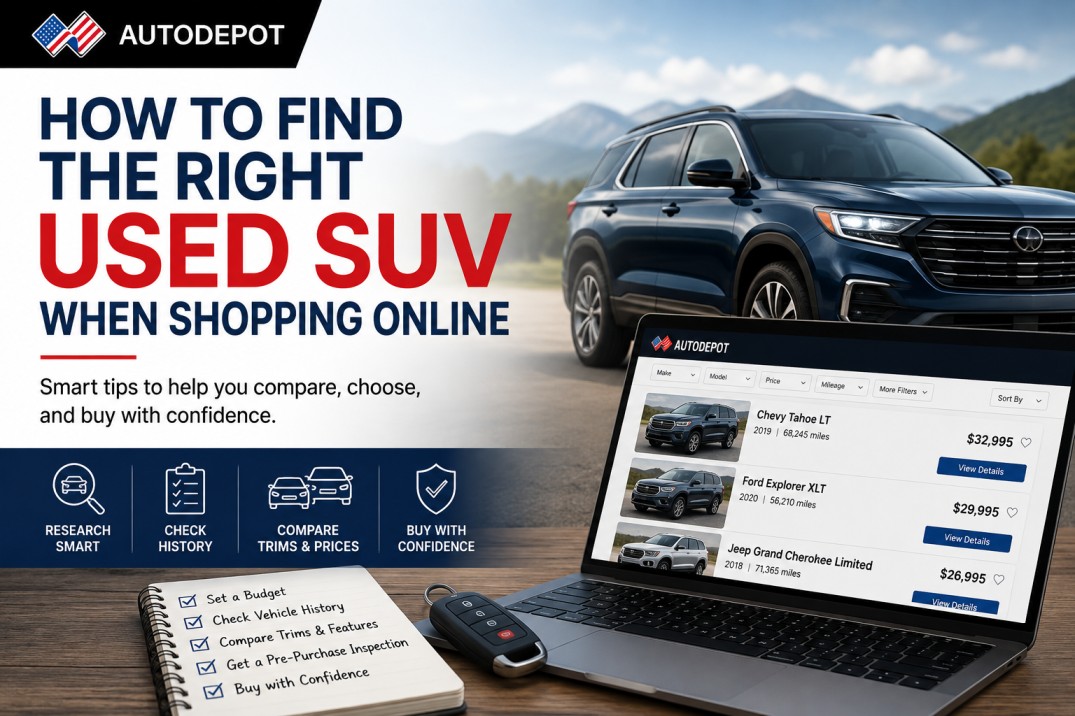
How to Find the Right Used SUV When Shopping Online

Shopping for a used SUV used to mean spending your entire weekend walking dealer lots under the scorching sun, comparing window stickers, and hoping the salesperson wasn’t steering you toward whatever needed to move off the lot fastest. However, now this whole process can happen right from your couch with Auto Depot. More and more buyers have switched to buy used cars online in USA marketplaces, and for good reason. Our process is faster, more transparent, and gives far more information in your hands before you even schedule a test drive. 

But “more information” is only helpful if you know what you are looking for. Buying an SUV starts with a vague idea that you require a vehicle that is reliable, mid-sized, and not too old. This can quickly turn into decision fatigue once you are staring at hundreds of listings. But don’t worry, because in this guide we will tell you about how to narrow the field and shop smart.

Start With How You’ll Actually Use It

Finding a reliable car goes beyond filtering by price or mileage; you need to get specific about your daily reality. Ask the following questions:

  1. Do you need three rows for carpool duty, or is a compact two-row SUV plenty for a couple with occasional road trips? 
  2. Will you be hauling gear, towing a trailer, or mostly commuting on paved roads? 

SUVs vary widely in terms of cargo space, towing capacity, and fuel economy. The right car is the one that matches your actual life and not the one that has the flashiest listing photos. 

Set a Realistic Budget — Including the Hidden Costs

Sale price is only one part of the equation. The rest is formed by insurance (SUVs, especially larger ones, often cost more to insure than sedans), fuel, and maintenance. A well-known example of this is buyers who find used Chevy Tahoe listings are often drawn in by the low mileage-per-dollar value of a full-size SUV but should budget for larger tires, brakes, and a bigger fuel tank to fill. Knowing your all-in monthly cost beforehand prevents an expensive surprise later.

Check the Vehicle History Before You Fall in Love

Every listing should come with a VIN. Run this through a vehicle history report and check for any prior accidents, title issues (salvage, flood, lemon-law buyback), number of previous owners, and service records. Even a clean-looking used SUV can come with a rough history report, and this makes for a bigger risk than a slightly older one with documented, consistent maintenance.

Compare Trims, Not Just Models

Two SUVs of the same make and model can still be worlds apart, and this is based on the trim level. Four-wheel drive, third-row seating, upgraded infotainment, and safety packages (blind-spot monitoring, adaptive cruise control) are often trim-specific. When you buy used cars online in USA listings side-by-side, closely consider the trim and options list and not just the headline price. This is one of the major reasons why two “identical” SUVs can differ by thousands of dollars.

Popular Used SUV Sizes at a Glance

Don’t know which size category will fit your needs? Follow this quick comparison to narrow down your search before you start browsing listings.

SUV Size Typical Seating Best For Example Models
Compact 5 seats City driving, commuting, first-time SUV buyers Honda CR-V, Toyota RAV4
Mid-Size 5–7 seats Families needing extra cargo or occasional third row Ford Explorer, Jeep Grand Cherokee
Full-Size 7–8 seats Large families, towing, maximum cargo space Chevy Tahoe, Chevy Suburban
Electric/Hybrid 5–7 seats Lower fuel costs, eco-conscious buyers Tesla Model Y, Toyota RAV4 Hybrid

A few quick takeaways when you’re comparing sizes:

  • Compact SUVs are easiest to park and cheapest to insure but tight on cargo for road trips or hauling gear.
  • Mid-size SUVs hit the sweet spot for most families, enough room without the fuel costs of a full-size model.
  • Full-size SUVs, like when you find used Chevy Tahoe listings, offer the most towing capacity and third-row space, but expect higher fuel and insurance costs.
  • Electric and hybrid SUVs cost more upfront but can offset that with lower running costs over time.
  • Whatever size you land on, cross-check availability and pricing across multiple listings before committing. This is where shopping online really pays off.

Use Verified Listings and Real Dealer Reviews

Not all listings are to be trusted; anyone might click a photo and post it online with a price. This makes it very crucial to look for only those platforms that verify dealer inventory, show real pricing (not “call for price”), and let you see dealer ratings from actual buyers. If you’re trying to find used Chevy Tahoe inventory near you, then a verified marketplace will save you from wasted calls to dealers who don’t actually have the vehicle, or even worse, list it at a bait-and-switch price.

Get a Pre-Purchase Inspection

Having a clean history report is still not enough. You must also have an independent mechanic inspect any used SUV before finalizing the purchase, especially when it comes to higher-mileage vehicles. This small upfront cost in the beginning will save you thousands of dollars later on if it uncovers a transmission or suspension issue the seller didn’t disclose.

Why Trust Matters More Online Than In Person

When you cannot kick the tires in person before narrowing your list, it is the platform you shop on that matters. Seek for such marketplaces that pull real-time dealer inventory (not stale listings), disclose accident and title history upfront, and are transparent about how pricing and dealer partnerships work. Reviews from real buyers, clear return or guarantee policies, and responsive support—all of these signal a platform that’s built around helping you make a confident decision and not merely generating a lead.

Ready to Start Your Search?

The right SUV is waiting for you out there; all you need are the right tools to find it. Browse thousands of verified listings, compare trims and pricing side-by-side, and connect directly with trusted dealers ready to answer your questions at Auto Depot. Start your search today on our website and drive away with an SUV that actually fits your life. For more information, you can call us at +1-844-953-1100. 

FAQs

  1. Is it safe to buy a used car entirely online?

Yes, as long as you use a reputable platform that verifies dealer inventory and provides vehicle history reports. Always confirm the VIN, request a pre-purchase inspection, and read the dealer’s return or guarantee policy before finalizing payment.

  1. What’s the best way to find used Chevy Tahoe listings near me?

Use a marketplace that lets you filter by make, model, trim, mileage, and location and shows real-time dealer inventory rather than outdated listings. This narrows your search to vehicles that are actually available today.

  1. How do I know if a used SUV’s price is fair?

Compare similar trims, mileage, and condition across multiple listings in your area. Pricing tools that show market averages for a specific make and model can help you spot a good deal versus an overpriced listing.

  1. Should I get a vehicle history report even if the listing looks trustworthy?

Always. A vehicle history report can reveal past accidents, title issues, or inconsistent maintenance that aren’t visible in photos or a written description, no matter how polished the listing looks.

  1. Can I negotiate price on a used SUV I find online?

In many cases, yes. Online listings often include a “make an offer” or direct-message option with the dealer, and having comparable listings pulled up gives you leverage to negotiate a fair price.